Robbie Thain
Founder, CEO

Overlooking local permits can turn a costly field launch into a disaster. Learn how a strict compliance framework de-risks street activations and guarantees ROI.
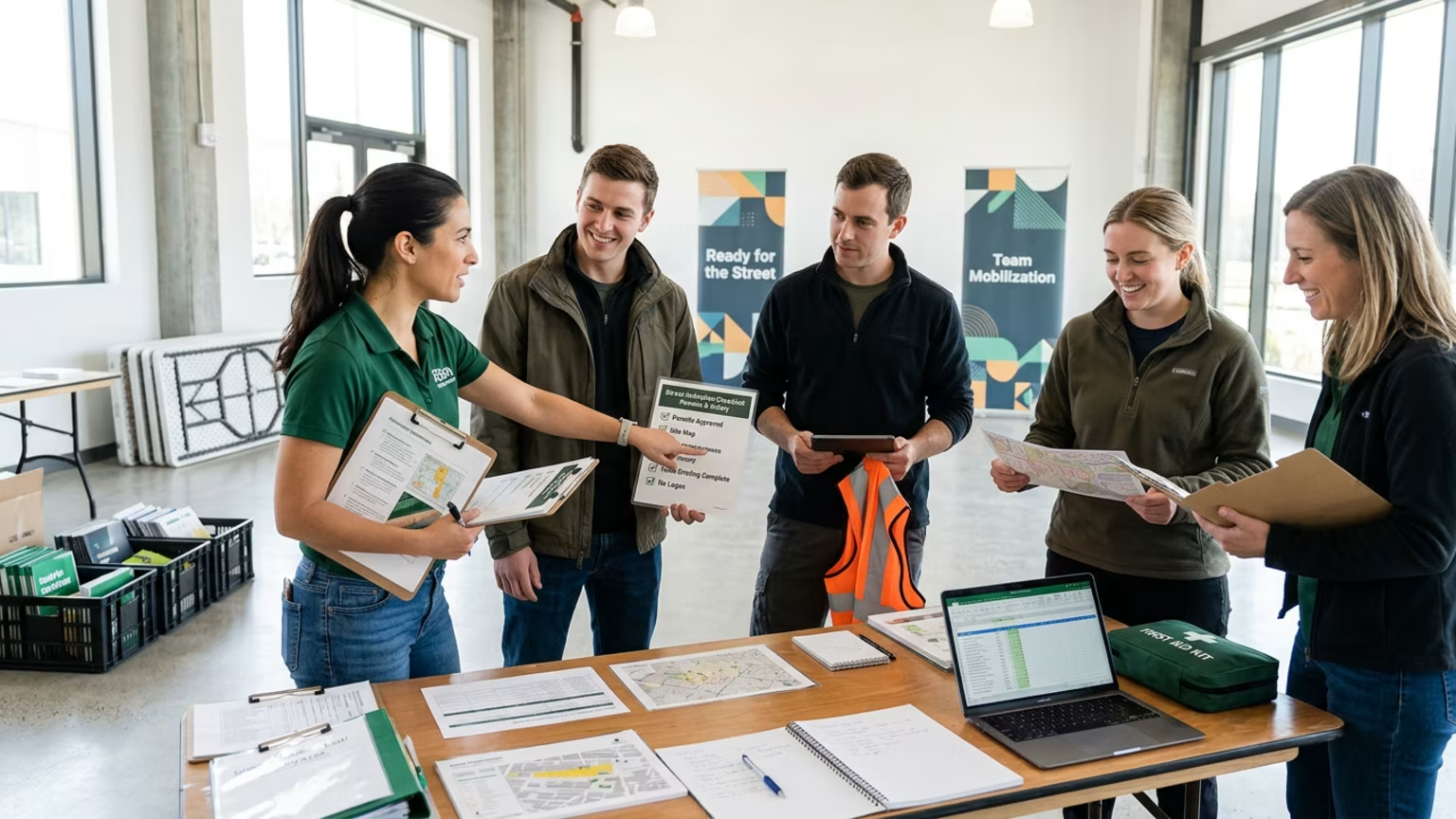
Planning the perfect creative concept is the least significant part of a street activation. The most beautiful brand experience in the world means nothing if city police shut it down in twenty minutes.
Ignoring local permits and venue policies will quickly turn a costly field launch into a public relations disaster. A strict compliance framework protects your brand reputation and guarantees your activation actually happens.
Your team arrives at a premium downtown plaza with two custom sampling trailers. The product is perfectly chilled. The brand ambassadors are fully trained and ready for action. Then a property manager walks out with a clipboard and demands your commercial vendor permit.
You lack the specific document for that exact block. You are ordered to pack up and leave immediately. Your massive investment is wasted entirely. This scenario happens frequently to brands that focus purely on aesthetics and ignore the paperwork.
Industry analysis of field marketing roles shows a growing demand for strict compliance skills. Standard job profiles now require managers to handle complex local ordinances and landlord agreements. Securing a footprint is never as simple as setting up a branded tent.
You must secure approvals from city councils, health departments, and private landlords long before the event day. Failing to clear these hurdles leads to heavy fines and damaged retail relationships. A single citation can ruin your entire operating budget.
Word spreads quickly when an activation gets shut down in public. Shoppers post videos of police escorting brand teams away from retail centers. This creates a deeply negative association with your new product launch. The operational failure becomes the only story people remember.
Field staff morale plummets rapidly when an activation faces a sudden shutdown. Brand ambassadors thrive on high energy interactions and steady foot traffic. Standing around as managers argue with police officers drains their enthusiasm instantly. Good talent will simply stop working for brands that consistently put them in awkward legal situations.
Retaining premium field staff requires a safe and fully permitted working environment. Top tier ambassadors expect professional logistics and airtight local compliance. If they feel exposed to municipal fines, they will quickly move to another agency.
You need a systematic approach to secure permissions long before the first brand ambassador arrives. This process begins with mapping out every single authority layer for your target location. A public sidewalk often falls under municipal city jurisdiction. The private building right next to it belongs to a commercial landlord.
You must identify all stakeholders early in the planning phase. Treat the permitting process like a high stakes enterprise sales cycle. You must build relationships with local officials, health inspectors, and fire marshals. They hold the ultimate power to approve or reject your plans.
Providing these officials with clear schematics and professional documentation builds trust quickly. A well prepared permit application shows that your team takes safety seriously. This approach requires dedicated time and significant internal resources. Rushing the administrative process guarantees costly mistakes and missing signatures.
You must clearly distinguish between public property permits and private property agreements. Public property requires applications through city planning departments and special event offices. This path involves strict deadlines, public safety reviews, and non negotiable fees. Private property relies entirely on the discretion of commercial property managers.
Landlords care deeply about tenant disruption, parking lot flow, and liability insurance. You must pitch the property manager on the value your brand brings to their space.
You must bake a generous time buffer into your project timeline. Many teams rely on a standard checklist for managing local ordinances. This creates a repeatable process across different cities and regions. Consistency is your absolute best defense against bureaucratic surprises.
Different cities enforce radically different rules for promotional marketing events. What works in Austin might result in an immediate fine in Chicago. A centralized compliance strategy stops these regional variations from derailing your national tour.
You need a structured action plan to get your team onto the street legally. Following these exact steps will keep your activation safe from unexpected closures.
You cannot improve a process that you do not measure carefully. Tracking compliance metrics provides clear visibility into your operational efficiency. This data helps you prove Return on Investment to senior leadership.
Permit Approval Lead Time is a critical early indicator of team efficiency. Measure the days between submitting an application and receiving the final signature. A shorter lead time indicates strong relationships with local authorities and clear paperwork.
Venue Response Rate tracks how quickly landlords reply to your footprint requests. A low response rate means your initial outreach lacks professional polish or clarity. Improving this metric speeds up the entire location scouting process.
Uptime Percentage measures the total hours your activation remains open versus planned hours. Shutdowns caused by missing paperwork will drag this number down incredibly fast. High uptime proves your permitting strategy actually works in the real world.
Citation Costs track any fines or fees incurred during the field program. A perfect campaign will maintain a strict zero dollar citation balance. Any unexpected fines represent a direct failure in your advance planning process.
Cost Per Sample Distributed is the ultimate efficiency metric for any field campaign. You calculate this by dividing total operational costs by the number of samples given away. Delayed starts from permit arguments reduce your total sampling window drastically.
Fewer hours on the street means fewer samples reach actual consumers. This directly inflates the cost of every single interaction and ruins your budget. Efficient compliance protects your sampling time and keeps your acquisition costs incredibly low.
In our experience managing national roadshows, preparation always beats reaction. We recently partnered with a rapidly growing CPG beverage brand for a campus tour. They needed massive trial volume but faced a web of strict university vendor policies.
Universities often act like independent cities with their own police and health codes. Our team mapped out the individual requirements for twenty different major college campuses. We secured health department variances for chilled product distribution in high traffic public squares. We negotiated directly with campus police to clear our branded vehicles.
This prevented our heavy sampling trucks from receiving parking citations during setup. Distributing custom iced drinks required massive daily ice deliveries to our footprint. We had to coordinate these commercial vendor deliveries with strict campus traffic schedules. Our team submitted detailed logistical flow charts to the university facility managers.
We proved that our supply trucks would not block student pedestrian paths. This proactive communication prevented any clashes with campus security during peak class changes. The results completely validated the heavy upfront administrative work our team executed. The client avoided any shutdowns and hit every single daily sampling quota.
A VP of Marketing in the CPG beverage category told us: 'Robbie, your leadership and vision turned our campaign into something truly special. The Makai team brought our new drink to life with energy, creativity, and flawless execution. Thanks to you, our brand isn't just tasted, it's remembered.'
Our team's approach transformed their product launch into a highly memorable brand experience. We handled the complex red tape so the brand could focus on pure consumer engagement. If your brand needs to deploy a complex national sampling tour safely, let us handle the logistics. Book a strategy call with our team today.
Bureaucracy and paperwork are rarely the glamorous parts of marketing. Yet mastering the rules of the street is the only way a brand can truly own it.

30 Years Experiential & Retail Activation Partner for CPG & Beverage Brands | Multi-Market Demos, Roadshows & Costco/Club Programs That Actually Sell