Robbie Thain
Founder, CEO

Learn how the new ANA and 4As pitch principles help brands de-risk experiential agency selection, streamline execution, and demand measurable ROI.

The Association of National Advertisers and the American Association of Advertising Agencies recently issued ten new principles to streamline agency reviews and reduce pitch burnout. For brands running physical activations, this guidance offers a rigid framework to stop wasting money on speculative theater and start demanding measurable business outcomes.
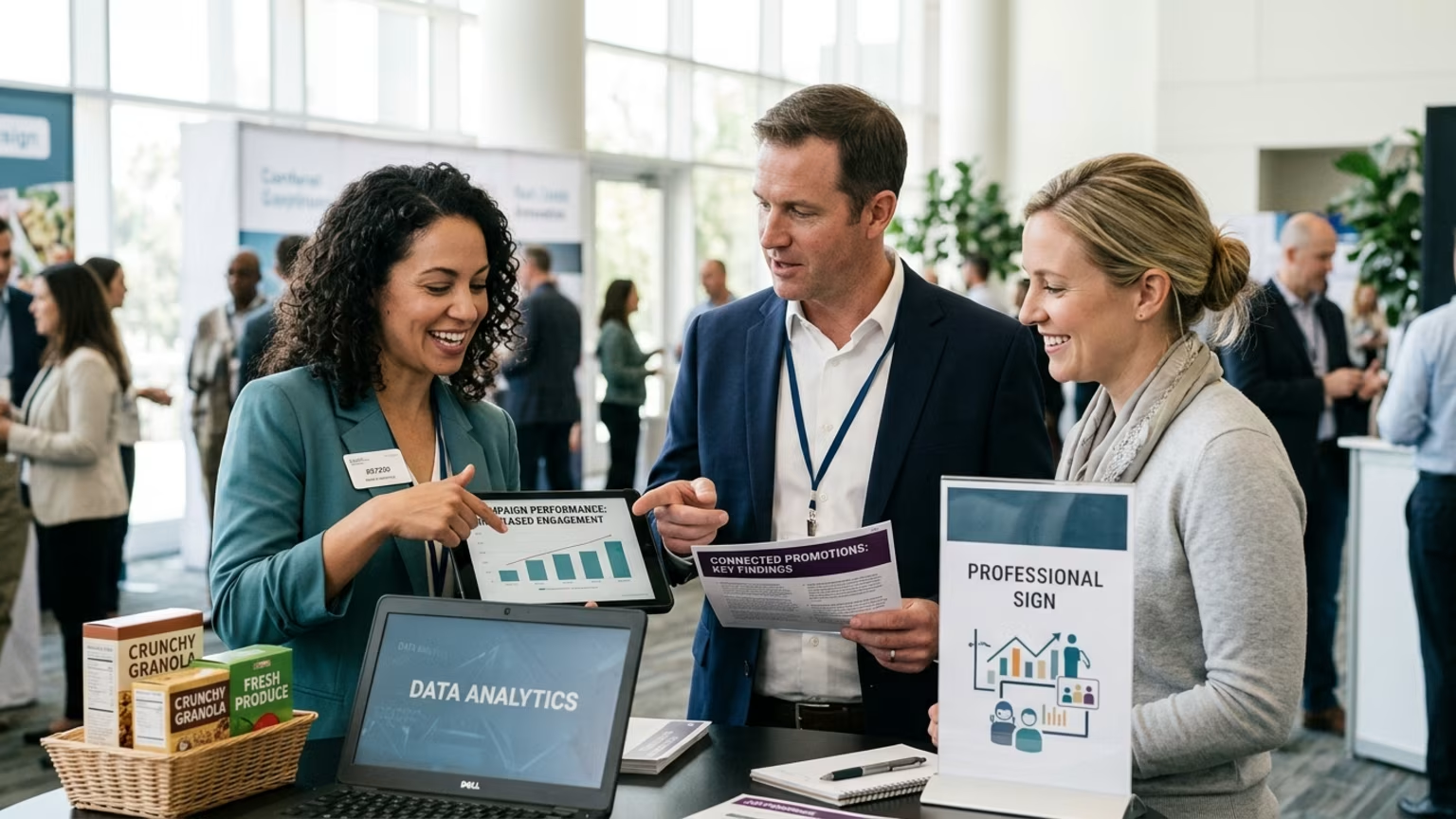
Walk onto any major expo floor at 9:00 AM on opening day. You will quickly spot the brands that hired an agency based on flashy renderings rather than operational reality. The booth staff is untrained, the sampling product is stuck at a loading dock, and the primary lead capture system is broken. Marketing directors watch their quarterly budget evaporate as brand ambassadors hand out warm drinks to unqualified foot traffic.
This chaos usually starts months earlier in a conference room. Brands issue vague Request for Proposals asking for big ideas without providing a transparent budget or clear performance metrics. Agencies respond with expensive speculative work that looks great on a screen but falls apart in a physical retail environment. The resulting partnership focuses on aesthetics instead of logistics, lead generation, and Return on Investment (ROI).
When the pitch process lacks discipline, the actual event execution always pays the price. The cost of a failed pitch goes far beyond the initial agency retainer. When an activation misfires, the brand loses invaluable market momentum and irreparably damages retailer trust. Field marketing requires precise execution, tight schedules, and flawless logistics. If the pitch process ignores these realities, the brand is funding an expensive science experiment.
For decades, the experiential marketing industry has relied on the traditional idea pitch to secure new business. Brands issue a broad creative brief, and agencies respond with elaborate theatrical presentations. The room is filled with beautiful storyboards, ambitious digital renderings, and promises of massive consumer engagement. The brand team gets excited by the vision, signs a hefty retainer, and expects magic to happen on the show floor.
The problem is that these presentations rarely account for the grueling reality of field execution. A beautiful concept on paper means nothing if the agency lacks the operational infrastructure to secure health department permits. When agencies sell ideas without proving their execution capabilities, the brand inherits all the operational risk. The ANA and 4As principles aim to dismantle this broken system by forcing both sides to focus on practical realities.
Brands must transition away from buying creative promises and start investing in operational certainty. You are not hiring a partner to draw pictures; you are hiring them to move physical products into the hands of target buyers. A rigorous pitch process strips away the theater and reveals whether an agency actually knows how to run a complex field program.
MarketingDive reports that the new guidelines focus on reducing cost, removing friction, and establishing clear metrics up front. The goal is to move the industry away from free speculative work and toward transparent partnerships. For leaders managing shopper marketing and consumer events, these principles require a massive shift in how you brief potential partners. You must stop asking agencies to guess your budget and start providing exact financial constraints.
Agencies cannot build effective operational plans without knowing the financial boundaries. When brands hide their budgets, agencies waste countless hours designing elaborate experiences that will never see the light of day. Providing absolute financial clarity allows the right partner to engineer a program that maximizes every dollar. This transparency protects the brand from hidden fees, surprise vendor invoices, and last minute budget requests.
A structured approach begins with defining your core business problem before calling a single agency. Are you trying to drive retail sell through for a new snack item or capture qualified contacts at an industry expo? Once the problem is clear, the brief must mandate operational proof over creative concepts. Require your prospective agencies to explain their staffing models, logistical contingency plans, and CRM integration methods.
To guarantee you get the right operational fit, you can reference our guide to hiring the right experiential partner in Los Angeles for practical vetting tips. A tightened brief guarantees you only evaluate partners capable of turning a creative concept into a measurable field program. When both parties agree on success metrics early, the focus shifts to creating pipeline instead of managing misaligned expectations.
Transforming a loose pitch process into a precise selection system requires strict adherence to operational standards. Use this step by step playbook to evaluate your next live event partner.
A disciplined pitch process means nothing if you cannot measure the final output. The new agency guidelines demand clear performance indicators from day one. You must define lead and lag metrics to hold your new partner accountable.
Lead metrics track the immediate health of your activation. Watch your cost per engagement, the number of qualified interactions per hour, and your daily sample distribution rate. You must monitor the lead capture completion percentage to verify staff members are actually qualifying visitors. These numbers give you real time feedback to adjust the activation on the fly.
Lag metrics tell the final story of your campaign ROI. Look at total retail sales lift in the surrounding zip codes over the thirty days following the event. Track the percentage of captured leads that converted into measurable pipeline or repeat purchases. These final data points prove whether your rigorous agency selection process actually generated business value.
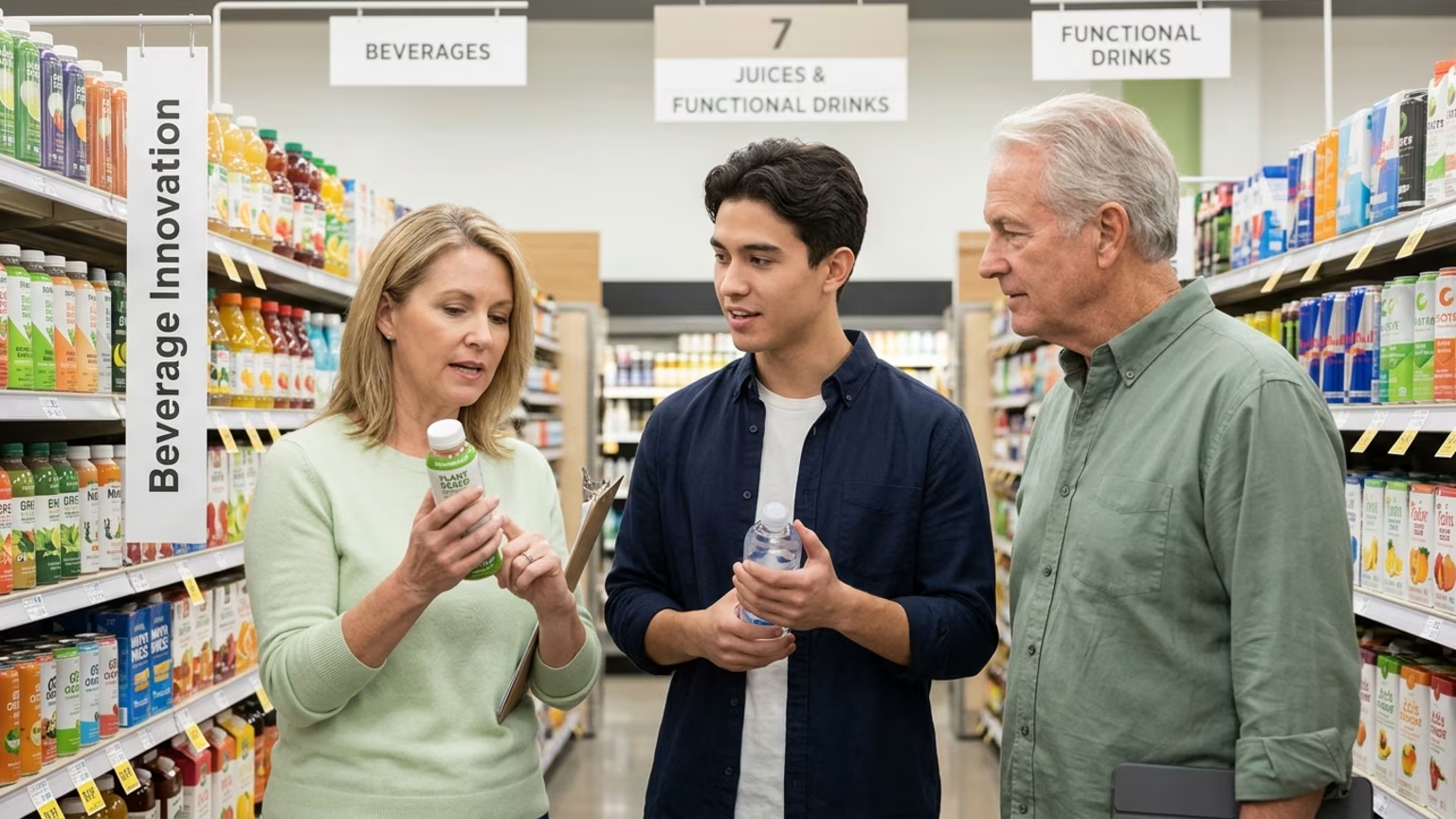
A national beverage brand recently prepared to launch a new line of zero sugar energy drinks across twenty major retail markets. Their previous product rollout suffered when the agency overspent on custom booth fabrication and underfunded the regional staffing budget. Brand ambassadors were undertrained, the sampling stations lacked adequate refrigeration, and the entire campaign failed to generate retail momentum. To avoid repeating this mistake, the marketing director applied strict pitch principles to their new agency review.
They provided the exact budget limit and required a detailed cost breakdown for logistics, staffing, and permitting. The marketing team explicitly stated that the primary goal was driving immediate retail trial rather than generating passive social media impressions. Prospective agencies were graded entirely on their operational footprint, their ability to secure permits, and their ambassador training protocols. To see how comprehensive logistics support looks in practice, review our brand activation services to understand the full scope of field operations.
The winning agency ignored flashy concepts and presented a heavily operational plan focused on maximizing product trials at high traffic retail locations. The agency guaranteed precise inventory management and deployed a centralized tracking system for daily sample distribution. This operational focus mirrors how General Mills streamlined their demo execution to solve staffing inconsistencies. The beverage brand achieved a twenty percent increase in verifiable retailer sell through and stayed completely under budget.
Agency reviews do not have to be painful, expensive, or disappointing. By adopting clear metrics, sharing honest budgets, and prioritizing operational reality over speculative art, you protect your brand from catastrophic event failures. The right partner will welcome the clarity and deliver actual results. When you are ready to build an activation that generates real ROI, book a strategy call with our team.

30 Years Experiential & Retail Activation Partner for CPG & Beverage Brands | Multi-Market Demos, Roadshows & Costco/Club Programs That Actually Sell