Robbie Thain
Founder, CEO

Engagement marketing helps CPG and beverage brands drive trial and repeat purchase through two way shopper interactions across retail, events, and digital. This guide explains what it is, how it works, what to track, and how to build a simple plan you can run.
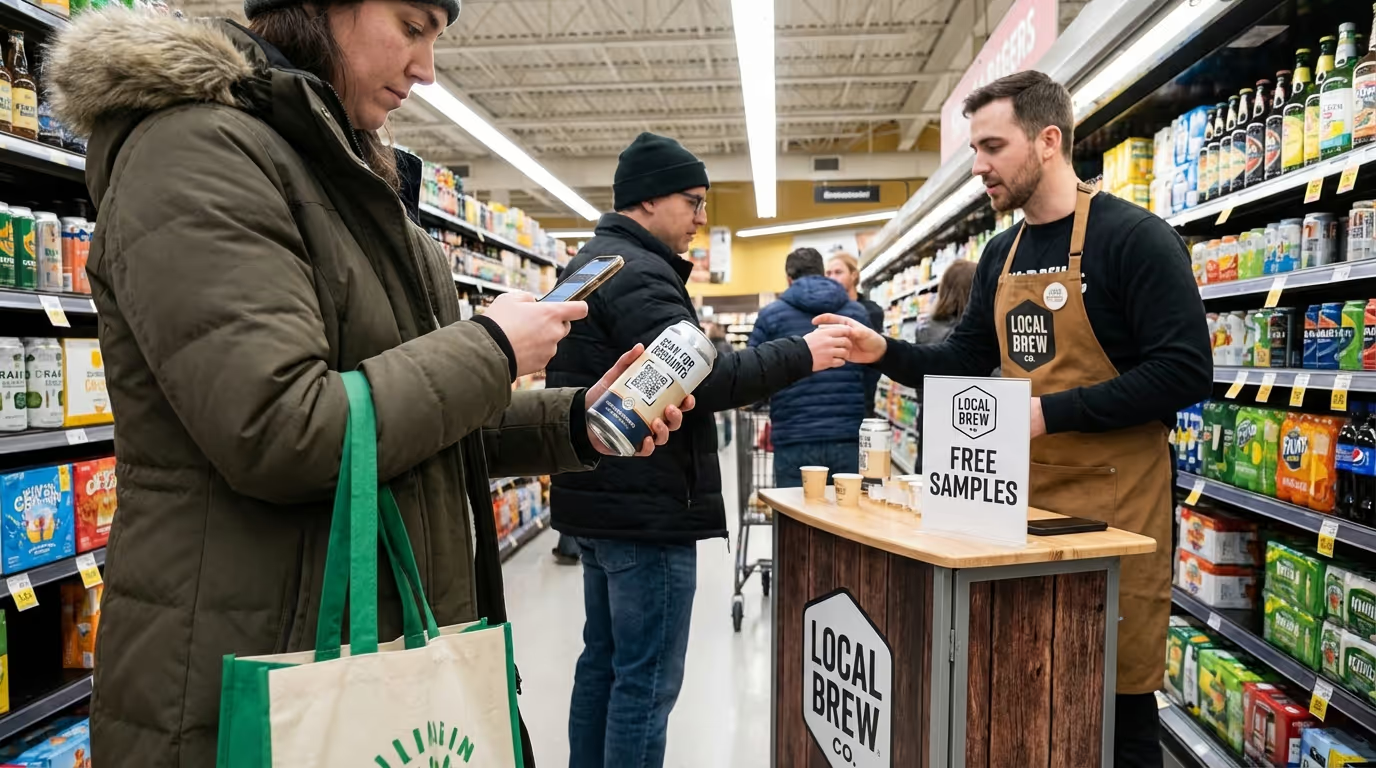
Quick answer: Engagement marketing is how CPG and beverage brands build a relationship with shoppers through two way interactions across the full journey, not just one way ads. It blends retail moments like demos, sampling, packaging, and shelf presence with digital touchpoints like social, email, SMS, and connected packaging. The goal is simple, drive trial, earn repeat purchase, and build loyalty in categories where products are easy to replace.
CPG and beverage are crowded. Shoppers can switch brands fast. A new flavor, a promo, or a new product on the shelf can change what ends up in the cart. That makes “awareness” a weak goal on its own. Brands need more than a message. They need ongoing interaction that turns attention into action, then turns action into habits.
Engagement marketing helps because it gives brands a way to show value at the right time, in the right place, and in a way that feels personal. When it is done well, it does not feel like advertising. It feels like help, entertainment, or a small reward that makes the shopper want to come back.
Engagement marketing is the effort to build a relationship with consumers through intentional, ongoing interactions across channels, rather than isolated campaigns.
In CPG and beverage, that usually means your retail world and your digital world work together. Your shelf, your packaging, your sampling, and your events should connect to your social, email, creator content, and any loyalty or scan based experiences you run.
Think of it like a conversation that moves in steps:
Traditional advertising is often one way. The brand speaks. The shopper listens or ignores it. Engagement marketing is built for response. The shopper can interact, ask, try, and participate.
Here is the easy difference:
One is a broadcast. The other is a system.
Every touchpoint should give the shopper something useful. Education, entertainment, a better experience, a small reward, or a feeling that the brand understands them. If it is just “more ads,” it will not build anything long term.
Use channels where shoppers can respond or participate. Social, SMS, email, sampling, QR codes, loyalty, and on site brand experiences all support two way interaction.
Plan for the full journey. Do not treat “the demo” and “the social campaign” as separate. Make them feed each other. A great engagement strategy creates a path from first contact to repeat purchase.
Shoppers should feel the same brand promise everywhere. The booth, the sampling table, the packaging, and the social content should all sound like the same brand.
Engagement marketing is not one tactic. It is a set of connected moments. Here are the most common ones that work well for CPG and beverage brands.
This is where Makai supports brands with retail demonstrations and programs that turn trial into sales. If you want the service view, see engagement marketing.
Social is where brands can show real usage, routines, recipes, and lifestyle moments. In CPG, content that wins is usually practical and repeatable, not overly polished.
QR codes and NFC can turn packaging into a gateway, not just a label. This can unlock value after purchase and create a direct connection with the shopper.
The key is to make the scan worth it. A QR code that leads to a generic homepage will not build engagement.
These are still some of the strongest engagement channels when used with restraint. A short, useful sequence can turn a first time buyer into a repeat buyer.
Events create memories. That is a big reason they drive loyalty. A brand experience is easier to remember than a banner ad. Tours also generate content, feedback, and proof your sales team can use.
You do not need a complex “brand ecosystem” deck to start. You need a simple plan you can run, measure, and improve.
Pick a real problem or desire in your category. Keep it simple.
Then make your touchpoints solve or reinforce that idea again and again.
Occasions drive purchase. A beverage can be “post workout” or “afternoon slump” or “weekend hang.” Snacks can be “lunchbox” or “movie night” or “road trip.” Pick two to four key occasions and build around them.
Make a simple map with your touchpoints. You can do this on one page.
A common mistake is pushing the same offer everywhere. Instead, make each stage feel natural.
Engagement marketing should be tracked with both behavior and relationship metrics. You want to see what people do and how they feel over time.
Engagement is not a one shot campaign. It gets stronger with iteration. Test small changes in creative, offers, and sequences. Keep what works and cut what does not.
Here are two examples you can use as a mental model.
A beverage brand runs creator content around functional benefits and daily routines. It supports trial through in store sampling. Each can has a QR code that unlocks a short reward experience, like recipes, playlists, or a points system. The scan also gives the brand a direct relationship channel for future drops and repeat incentives.
A pantry brand turns basic ingredients into repeat habits. Packaging and email send people to recipes, meal plans, and simple guides that fit real weeknight needs. In store demos help shoppers taste and learn. Over time the brand becomes a go to solution, not just a commodity on a shelf.
Many brands think engagement marketing is only digital. In CPG and beverage, retail and real world moments are often where trial and trust happen fastest. That is why the strongest engagement programs connect in store activity with digital follow up.
Makai supports brands with retail demos, sampling, roadshows, mobile tours, brand ambassador teams, logistics, and clean reporting. If you are planning a program, you can start with /services/engagement-marketing-that-turns-attention-into-action, then reach out through /contact or /request-proposal.
Engagement marketing is not about being everywhere. It is about building a system where each touchpoint makes the next one more likely, until trial becomes repeat and repeat becomes loyalty.

30 Years Experiential & Retail Activation Partner for CPG & Beverage Brands | Multi-Market Demos, Roadshows & Costco/Club Programs That Actually Sell